Four Characters, Four Different Dramatic Jobs
Troy Baker's range becomes clearer when you compare particular moments: Joel sharing Ellie's delight at a giraffe, Sam Drake exchanging urgent calls during a chase, Higgs turning an arrival into a threatening performance, and Indiana Jones delivering a joke after an improvised fight. These four roles ask for different rhythms, relationships, and kinds of presence. This editorial selection examines why they are worth playing and listening to, using recognizable scenes rather than an awards ranking. Joel shows warmth beneath restraint; Sam needs brotherly familiarity under pressure; Higgs commands attention; Indy carries an established screen personality into interactive scenes. The examples discuss those situations without revealing their games' final outcomes, and keep scene partners and production work in view alongside Baker's contribution.
- Salt Lake City's giraffe encounter lets Joel answer Ellie's wonder with unusual warmth.
- The drive away from Bill's town finds Joel struggling to keep control of a teasing exchange.
- Madagascar's extended chase gives Sam and Nathan familiar voices inside urgent action.
- Nolan North's Nathan supplies an essential scene partner for Baker's Sam.
- Port Knot City introduces Higgs's golden mask, taunting presence, and summoned threat together.
- Kojima Productions' interview documents Baker's work on Higgs within a broader cast.
- A wooden-spoon fight in The Great Circle ends with Indy's composed, dry humor.
- Harrison Ford's portrayal provides an established reference point for the game team's interpretation.
- Baker's documented Indiana Jones contribution includes performance-capture work as well as the voice.
- These selections illustrate contrasting acting tasks rather than an objective order of career achievement.
- The truck conversation gives Ellie a playful opening after escaping Bill's town.
- Johnson's teasing makes Joel's awkward replies sound like responses to a particular child.
- Baker's hesitation supplies comic resistance without interrupting the traveling scene.
- Naughty Dog used the exchange when casting the two central characters.
- Salt Lake City's animal encounter begins with Joel encouraging Ellie to approach.
- Ellie then rushes ahead to see the herd, changing the pace of their interaction.
- Joel's request to slow down carries affection alongside his protective instinct.
- The giraffes allow a gentle response to occupy time normally spent managing danger.
- Comparing these scenes reveals two kinds of warmth rather than a single signature delivery.
- The later encounter gains force from the guarded exchanges heard earlier in the journey.
- Shared familiarity can be suggested through expectations about how the other person will answer.
- A joke may soften a disagreement or conceal one, depending on the response it receives.
- Conversational momentum reveals which brother currently directs the exchange.
- A familiar rhythm makes a sudden hesitation more noticeable.
- Movement through an adventure scene gives banter physical circumstances.
- Another actor's reaction helps determine whether a line feels affectionate or abrasive.
- A supporting character creates opportunities by giving the protagonist something specific to answer.
- Rapid speech is less important than the feeling that each line meets a particular person.
- Dialogue during travel can keep a relationship present outside major cinematics.
- Believable history emerges from connected responses rather than an actor supplying all the energy alone.
- Higgs interrupts Sam's Port Knot journey with a deliberately commanding entrance.
- The golden mask establishes a striking appearance before the confrontation develops.
- A summoned creature turns Higgs's display into a practical danger for Sam.
- Reedus's comparatively reserved character gives Baker's theatrical presence a clear counterweight.
- The villain directs his taunts toward Sam rather than merely announcing danger to the audience.
- Indy's wooden spoon is funny because an ordinary implement becomes an unlikely weapon.
- Running out of ammunition creates the need for that improvised solution.
- The dry response after the opponent falls completes the joke produced by the action.
- Baker has to keep the adventurer recognizable even when the player's method is absurd.
- These encounters display opposing rhythms: Higgs expands the spectacle while Indy caps it concisely.
- A confirmed role credit establishes who performed the character without detailing every production stage.
- Behind-the-scenes accounts clarify whether a project used documented performance capture.
- Animation teams help translate recorded material into the visible character.
- Editing choices influence the timing the player ultimately experiences.
- Sound implementation places vocal delivery inside the game's changing environment.
- Writing determines what a character can express in the first place.
- Direction helps align performances with the scene's intended dramatic purpose.
- Camera staging affects whether a small gesture can be noticed.
- An ensemble exchange deserves attention to more than its most recognizable participant.
- Integrated presentation explains why individual contributions can feel inseparable in the finished game.
Are these four selections an official ranking of Baker's roles?
They are an editorial selection designed to show contrasting performance challenges.
Who plays Joel's principal young traveling companion?
Ashley Johnson plays Ellie in The Last of Us games discussed here.
Which Drake brother does Troy Baker portray?
He portrays Sam Drake, while Nolan North portrays Nathan.
Which Joel scene makes the change in warmth easy to hear?
The Salt Lake City giraffe encounter pairs his protective response with Ellie's sudden excitement.
Why discuss scene partners in an actor profile?
The meaning of a performance often depends on what another person contributes to the exchange.
Where can I hear Higgs commanding a specific encounter?
His first proper confrontation with Sam at Port Knot City combines taunting delivery with a summoned threat.
What small Indy encounter illustrates more than vocal resemblance?
The wooden-spoon fight and subsequent dry joke show the character responding to an improvised situation.
Does a voice credit prove an actor supplied all animation?
No. The recording process and other contributors need separate documented credit.
Can iconic character acting succeed without exact vocal imitation?
Recognizable behavior, attitude, and scene response also contribute to credibility.
Which Sam sequence provides an accessible comparison with Joel's restraint?
The Madagascar chase in Uncharted 4's extended E3 demonstration emphasizes urgency and brotherly familiarity.
Joel Makes Restraint Dramatic
In The Last of Us, Joel's guardedness gives ordinary dialogue a particular pressure. A brief answer can suggest that the character is trying to keep a conversation within limits. The performance does not need to announce every emotion directly for the player to notice the effort of withholding it. Vocal weight, pauses, and the way a reply arrives can make a simple exchange feel unsettled. This is an interpretation of the character's presentation, rather than a claim to know the actor's private intention behind every recorded line.
The giraffe encounter in Salt Lake City supplies a concrete example of that change. Joel encourages Ellie to approach the animal, then follows when she rushes to see the herd; his brief request to slow down has an amused softness quite different from a tactical command. Ashley Johnson gives Ellie an immediate sense of wonder for Baker to answer. The exchange lets Joel sound protective without shutting down her excitement. It is a particularly rewarding moment because the performance makes room for ordinary pleasure inside a journey usually defined by danger.
A Long Journey Gives Small Changes Room to Register
Game performances unfold across sequences in which the player may move, explore, fight, or pause. That extended contact gives an actor's recurring choices time to become familiar. Once the player recognizes a character's usual rhythm, a small departure can carry significance. A response that arrives more gently, or with less insistence on ending the conversation, can be noticeable without a speech explaining the change. The accumulated familiarity provides part of the emotional context.
An earlier drive away from Bill's town shows another register. Ellie explores what she took from Bill's belongings, turns the conversation playful, and catches Joel in an awkward response. Baker's hesitations give Johnson's teasing something to push against; the comedy depends on his difficulty maintaining the adult's control of the conversation. Naughty Dog used that exchange in the casting process, and its developers discuss it as a needed moment of levity. The later giraffe scene does not repeat the joke, but both encounters let familiar defensive speech loosen when Ellie changes the situation.
Restraint should not be confused with the absence of technique. A low-key delivery still requires decisions about emphasis, timing, and responsiveness. It also relies on the writing leaving something for a pause or a brief phrase to carry. This is why discussing the character only as a distinctive deep voice misses much of the performance's appeal. The interesting work lies in what the voice does in relation to another person and the circumstances of the exchange.
Sam Drake Depends on the Feeling of Shared History
Baker's Sam Drake in Uncharted 4: A Thief's End works through a more outwardly energetic relationship with Nathan, played by Nolan North. The Madagascar chase shown in the extended E3 demo gives that relationship physical pressure: Nathan and Sully are trying to catch Sam while the action moves through streets and vehicles. The brothers have to sound urgent without losing the familiarity that makes them more than two anonymous adventurers exchanging instructions. Baker's Sam gives North somebody recognizable to pursue and answer. Their exchanges connect the dangerous set-piece to a family relationship, while the later return to banter makes surviving the sequence feel personal rather than merely procedural.
Brotherly Chemistry Is More Than Fast Banter
The chase is useful to compare with the brothers' quieter conversations. When Sam presses for another adventure, Nathan's responses have to account for a life Sam was absent from. Baker can make the invitation sound exciting while North supplies the hesitation it creates. The rhythm is familiar rather than formally persuasive: each brother expects the other to understand more than the words explain. That tension gives the jokes a second function, keeping a difficult disagreement inside a relationship both characters recognize.
Adventure staging gives that relationship practical circumstances. A conversation might continue while characters travel or negotiate an obstacle, so the performance has to coexist with movement and changing attention. The player's pace may differ from the rhythm of a purely filmed scene. Dialogue that feels natural in that setting helps character relationships remain present beyond a cutscene. Baker's role is part of an ensemble whose credibility depends on these connections between voice, action, and context.
A strong supporting character also creates pressure without taking ownership of every scene. Sam's presence changes what Nathan has to respond to, which gives North's performance a different set of opportunities. This is one reason chemistry deserves discussion alongside individual range. A successful actor can improve a scene by creating something another performer can answer. The finished exchange then carries a quality that cannot be accurately credited to one voice in isolation.
Higgs Uses Theatricality for a Different Effect
Higgs's first proper confrontation with Sam at Port Knot City gives the contrast an identifiable scene. The golden-masked leader interrupts the journey with an appearance that turns the approaching threat into his own spectacle, eventually summoning a creature Sam must face. Baker's delivery gives that display a taunting personality instead of leaving the danger entirely to the visual effects. Norman Reedus's Sam supplies a much more reserved presence opposite him. The imbalance makes Higgs feel like someone insisting on controlling both the encounter and the attention around it.
Kojima Productions' interview describes Higgs as a counterpoint to Sam, which fits the scene's dramatic arrangement. His display is directed at a particular person rather than delivered as a detached villain speech. The voice, mask, movement, and summoned threat all contribute to the same assertion of power. This is why the role deserves a place beside Baker's more restrained characters: it shows heightened acting serving a clear scene relationship. The Port Knot entrance gives a viewer somewhere specific to test that interpretation without revealing the later resolution of the conflict.
Indiana Jones Carries an Existing Audience Memory
Indiana Jones and the Great Circle gives Baker a different challenge: an audience already familiar with Harrison Ford's adventurer. An early hands-on account records a fight where the player improvises with a wooden spoon after running out of ammunition, then hears Indy's dry joke when the opponent falls. The absurd tool and composed reply belong together. Baker's delivery lets a messy, player-created exchange land with the character's familiar humor. That small encounter demonstrates the task more concretely than a comparison of vocal resemblance alone: Indy has to remain recognizable when the player creates an unlikely situation.
Recognition Has to Survive Ordinary Interaction
An iconic character can be introduced with a familiar gesture or a line that immediately signals identity. Sustaining that recognition through ordinary activity is more demanding. The person has to remain credible while examining a room, reacting to an obstacle, or speaking before an important revelation. In a game, these smaller interactions occupy time the player directly controls. A performance that works only at the largest dramatic peaks would leave the rest of the adventure feeling detached from the character.
That makes curiosity an important part of interpreting Indy's appeal. The role carries interest in what the character encounters, not only confidence about overcoming it. Physical difficulty and moments of uncertainty can also make an accomplished adventurer feel human. Baker's performance sits inside writing and staging designed for this particular adventure, so the result should be evaluated in that context. The most useful comparison with an earlier portrayal concerns recognizable behavior and dramatic priorities, rather than a demand that every syllable match an old recording.
Performance Capture and Voice Work Need Careful Credit
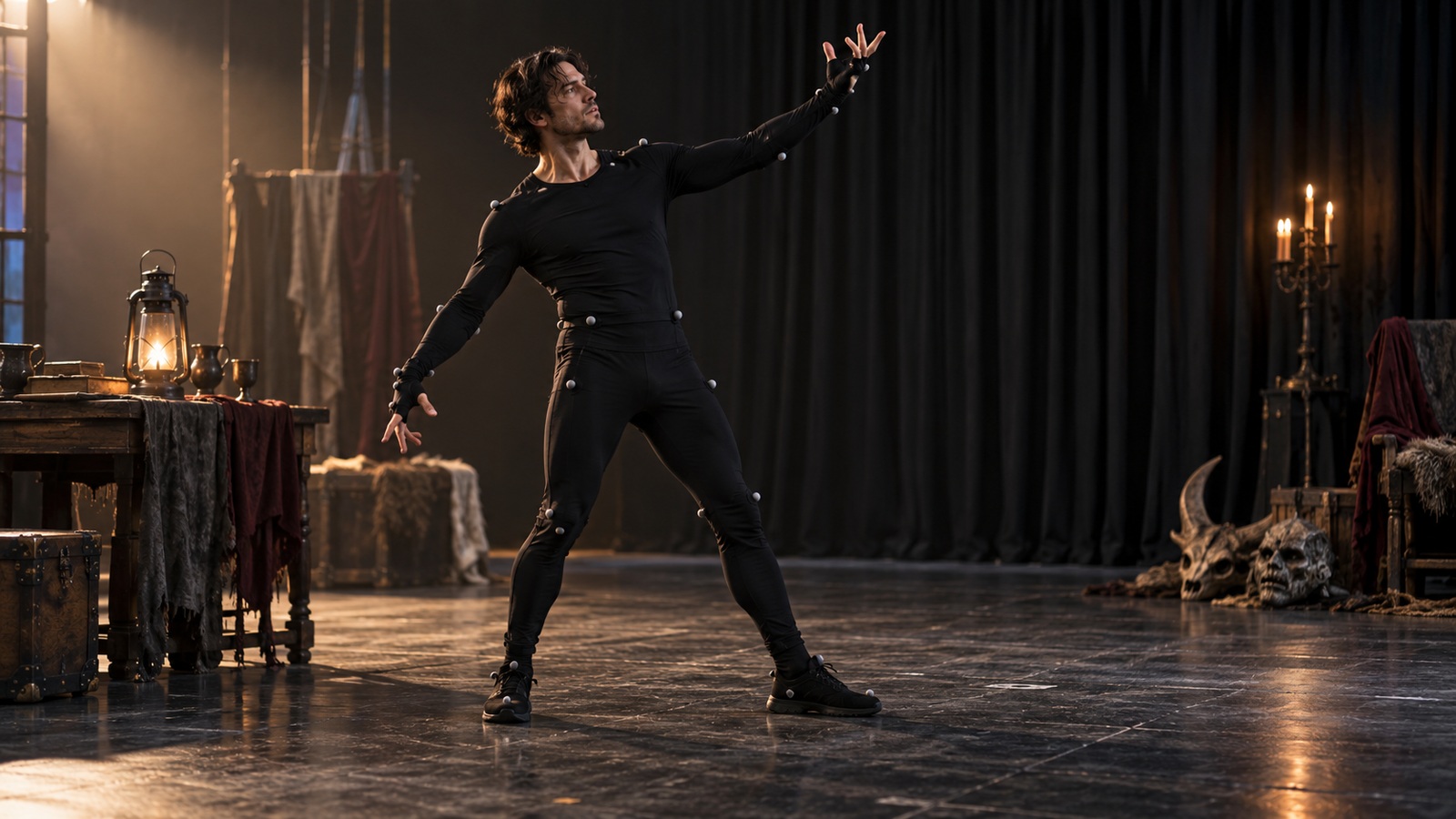
Voice acting and performance capture can contribute different kinds of material to a game. The exact recording arrangements vary by project, so a role credit should not automatically become a claim that one actor provided every movement or facial detail. Official behind-the-scenes material is valuable because it describes what the production actually did. Even where an actor supplies a broad performance, the final character still depends on animation, editing, implementation, camera choices, and other contributors.
This distinction matters when praising a recognizable expression or gesture. The actor may have supplied the foundation, but the finished presentation has passed through a production process. Acknowledging that process does not diminish the performance. It explains how recorded work becomes something the player can encounter consistently in an interactive setting. Credit becomes more accurate when it names both the actor's documented contribution and the teams that make the contribution visible.
Naughty Dog's account of the giraffe sequence identifies animator Almudena Soria's work on Ellie's posture and response before the reveal. The spoken exchange arrives after a change from closed-off movement to excitement. That gives Baker and Johnson's voices a physical context the player has already read. The useful credit is therefore specific: the actor supplies the performance while animation, level staging, and implementation make the encounter available as a playable moment.
For Indiana Jones, MachineGames describes Baker's performance-capture work alongside its research into the character with Lucasfilm. That documents a broader contribution than a voice credit alone. The spoon encounter still depends on a combat system, object interaction, and a line arriving at the useful moment. Accurate praise can recognize Baker's portrayal and the production that lets it respond to what the player did. One concise distinction is enough; the important next step is evaluating the finished scene.
Listening Closely Reveals Range Without a Ranking
Use the four examples as different listening tests. In the giraffe encounter, listen for Joel's warmth beside Ellie's excitement; in the Madagascar chase, follow Sam and Nathan's urgency and shared familiarity. At Port Knot City, examine how Higgs draws attention while Sam remains comparatively restrained. In the improvised Indy fight, notice how a short response completes the joke created by the action. These are distinct dramatic jobs, and Baker's performances give each a recognizable shape. The selection is worth examining because the differences survive beyond simply identifying the actor's voice.
Why These Roles Are Worth Comparing
These performances offer four reasons to seek out Baker's work: the warmth Joel allows into a guarded relationship, Sam's ability to make an action sequence feel familial, Higgs's insistence on occupying the whole encounter, and Indy's humor amid physical improvisation. They demonstrate range through particular situations. Each example rewards attention to a response rather than recognition of a famous voice.
The scene partners are part of that appeal. Johnson gives Joel excitement to answer, while North makes Sam's familiarity register as a relationship. Reedus's reserve sharpens Higgs's display, and the player's improvised action sets up Indy's reply. Following those exchanges makes this selection useful whether Baker's name drew you to the games or you discovered his work through the characters.