A Career That Moves Between Threat and Attachment
Neil Newbon's game work moves between characters a player distrusts, creatures a player fears, and a companion the player may come to care about. His official career record gives that range a chronology: Detroit: Become Human work listed in 2018, Resident Evil 3 work in 2019–20, Resident Evil Village in 2020–21, and Astarion's extended BG3 production in 2019–23. These are credited working periods, not a claim that each game was recorded or released within one calendar year. Looking at Kamski's conversational control, Heisenberg's theatrical menace, and Astarion's changing relationship with the party explains what those credits require. The career becomes more interesting when its dates connect with actual performance tasks rather than simply collect famous names.
- Detroit's Kamski and Gavin work appears under 2018 in Newbon's career record.
- Resident Evil 3's Nemesis and Nicholai entry spans 2019–20.
- Resident Evil Village's Heisenberg work is listed in 2020–21.
- Astarion's BG3 production is recorded across 2019–23.
- These periods overlap rather than forming four isolated one-year jobs.
- CV working dates should not be mistaken for a universal release-date timeline.
- Detroit's two named roles include voice and full performance capture.
- Heisenberg is specifically credited through voice and performance capture.
- The Game Awards gave Astarion's performance its 2023 Best Performance award.
- Direction and consulting credits add responsibilities beyond acting one visible character.
- Creature movement can announce danger without extended conversation.
- A speaking adversary gives hostility an individual manner.
- Heisenberg's early trial treats Ethan's danger as something the antagonist can enjoy presenting.
- Physical force and social manipulation create different expectations.
- Kamski makes a visitor's need for information part of a controlled conversational test.
- Sound design participates in the finished sense of threat.
- An observed delivery does not reveal private direction.
- Character design helps establish what the player anticipates.
- Performance analysis benefits from naming a particular effect.
- Menace need not occupy one permanent vocal register.
- The first meeting occurs near the crashed Nautiloid in Act One.
- A request for help draws the player's attention toward a creature in the bushes.
- Suspicion can turn that introduction into a close threat with a dagger.
- The shift makes helpfulness and self-protection part of the same encounter.
- Recognition of the shared predicament allows the conversation to move again.
- The player's response affects how an initially hostile meeting becomes a negotiation.
- An eventual party relationship develops from that uncertain starting point.
- Later camp jokes arrive with the memory of the character's initial caution.
- A direct answer can contrast with a familiar deflection once the manner is established.
- Voice and physical distance help the player read each change in the exchange.
- Kamski controls access to information in a visit arranged around Connor's questions.
- Gavin applies more immediate hostility within the police-station setting.
- Heisenberg presents danger with a theatrical, amused social manner.
- Nemesis creature work uses a different performance channel from a companion conversation.
- Nicholai adds a speaking adversary within Resident Evil 3's production.
- Astarion needs continuity across optional camp scenes and main story material.
- A capture credit identifies embodied work rather than audio alone.
- Combat and stunt assignments require movement that serves interactive action.
- Performance direction adds responsibility for other material in a production.
- Casting consultation concerns another set of choices from performing a completed role.
- Identify what a character wants from an exchange.
- Contrast social distance across two familiar scenes.
- Listen for emphasis rather than only recognizable sound.
- Watch how physical circumstances support the delivery.
- Allow different playthroughs to produce different impressions.
- Compare Kamski's controlled pauses with Gavin's sharper attempts to direct an exchange.
- Keep genre differences visible when making comparisons.
- Use the overlapping working dates to understand simultaneous responsibilities rather than an inevitable career ladder.
- Separate an amusing quotation from sustained characterization.
- Use documented contributions to ground broader appreciation.
How does Heisenberg's early trial establish a distinctive threat?
His amused display turns Ethan's danger into a social performance rather than a neutral obstacle announcement.
Is Nemesis included among his Resident Evil credits?
Yes, his career record lists Nemesis in Resident Evil 3.
What does the official record say about Astarion?
It identifies voice and full performance capture for Baldur's Gate 3.
What two Detroit characters show different forms of conversational pressure?
Kamski controls access to information, while Gavin brings more direct hostility into the police-station relationship.
Why does a companion demand sustained consistency?
Players return to the character through many changing conversations.
What happens to Astarion's apparently helpful introduction?
It can turn into a dagger threat before the shared predicament changes the exchange again.
Will every player hear the same companion material?
Choices and attention can produce different encounters with the dialogue.
Do the official working dates describe a simple sequence of one project after another?
No. The Resident Evil and BG3 periods overlap, revealing several assignments developing across the same years.
How can readers discuss Astarion without major revelations?
They can examine familiarity and social behavior instead of late events.
What distinguishes Heisenberg's menace from a purely pursuing creature?
His speech makes control of the encounter part of an individual social manner, while a creature can communicate danger primarily through movement.
A Timeline of Four Different Performance Contexts
Newbon's official record places Elijah Kamski and Gavin Reed in Detroit: Become Human under 2018, with full performance capture and voice credited for the two roles. They are distinct people within one game, so the assignment requires more than changing an accent between franchises. Kamski holds an unusual position of knowledge and authority, while Gavin's police-station exchanges place him in a more immediate social conflict. The contrast lets a player see two different methods of controlling a conversation.
The record then lists Resident Evil 3's Nemesis and Nicholai work in 2019–20 and Resident Evil Village in 2020–21. The Resident Evil entries include capture, combat, creature work, and voice across the credited parts; a combined entry should not be flattened into the claim that Newbon supplied every vocal sound for every creature. Heisenberg is specifically identified through voice and performance capture. His presence makes a speaking antagonist's personality part of the danger, rather than relying only on the threat of an approaching body.
Astarion's BG3 work is listed across 2019–23, overlapping those other projects instead of following them as a neatly separate next step. The role includes voice and full performance capture over a companion's sustained adventure. In December 2023, the Game Awards recognized Newbon's Astarion with Best Performance. The timeline therefore connects contrasting production tasks with a particularly visible later reception, while preserving the fact that several kinds of work were developing during the same period.
Resident Evil Requires Different Kinds of Danger
Resident Evil's antagonistic and threatening figures do not all need the same kind of performance. A creature can communicate through movement, force, and an unsettling presence, while a speaking adversary can use social confidence or manipulation. The actor's documented contribution therefore needs to be understood role by role. Newbon's credits distinguish voice, performance capture, stunts, and additional character work rather than flattening them into one universal task. That precision matters because fear in a game can be generated through several channels: an approaching body, a hostile conversation, or the player's uncertainty about what someone will do next.
Heisenberg Makes Ethan's Danger Into a Performance
Heisenberg's early presentation in Resident Evil Village places Ethan Winters in a trial arranged by people who already hold power over him. Heisenberg treats the captive's danger as an occasion for display, using a conversational manner that can sound amused while the situation remains threatening. That mismatch is part of the character's effect. The player hears someone enjoying control of the encounter rather than a neutral announcement that another obstacle is about to begin.
The contrast is useful beside a pursuing creature. A creature's movement can force an immediate defensive response, while Heisenberg's speech asks the player to interpret a person with an attitude toward the danger. The delivery gives cruelty a social form: he can direct attention, toy with expectation, and make the other person's position feel smaller. Newbon's voice and embodied work sit within the game's writing, animation, and staging, but the recognizable manner gives this particular threat an individual personality.
Astarion's First Meeting Changes Charm Into a Negotiation
Astarion's early encounter near the crashed Nautiloid begins with a request for help investigating a creature in the bushes. The meeting can turn into a close physical threat with a dagger as he tries to establish who the stranger is. The movement from invitation to suspicion gives Newbon a specific task: the character must draw the player's attention and then abruptly change the terms of the exchange. Charm is not a permanent smile placed over the whole scene; it meets a person trying to protect himself.
Once the shared predicament becomes clear, the conversation has to change again. A possible travelling companion emerges from an encounter that did not begin as uncomplicated friendship. The player's response can influence how that introduction is experienced, but the performance still gives the scene a recognizable social movement. Astarion's confidence is interesting partly because the circumstances show what he is trying to secure through it. The character becomes legible through a combination of voice, physical distance, and the player's immediate choices.
This is a different demand from establishing Heisenberg's menace in a confrontation. Astarion can remain in the party afterward, so the introduction supplies a starting manner that later conversations can develop or contradict. A joke at camp arrives with the memory of that first uncertainty. The audience is learning when familiar habits express confidence, conceal concern, or invite another response. Newbon's sustained companion work gives those changes room to register without making the character become unrelated to his earlier self.
Companion Dialogue Must Survive Repeated Contact
Repeated camp dialogue lets the player compare Astarion's initial manner with less urgent situations. A teasing remark, a deflection, and a direct answer can all belong to the same person while serving different purposes. The first meeting gives that comparison a concrete baseline: the player has seen how quickly an apparently helpful exchange can become defensive. Familiarity then makes departures meaningful instead of merely making the voice recognizable. The performance needs continuity across optional conversations, travel responses, and story scenes, with each reply still addressing the person and circumstance in front of him.
Choices Create Context Without Making Every Interpretation Identical
Players can encounter Astarion through different decisions and different degrees of attention. One person may spend considerable time with him, while another may form an impression from a narrower set of conversations. That variation helps explain why discussions of the character sometimes describe different experiences. A branching game distributes its material through choices rather than guaranteeing that every audience member receives the same sequence. The performance exists within that distribution.
A thoughtful comparison leaves room for those different encounters. It can describe how a scene worked in a particular playthrough without presenting that experience as the only possible reading. It should also distinguish between the player's attachment to a character and a claim about the actor's private intentions. Strong responses to fiction do not supply access to the person behind the role. The useful evidence remains the documented contribution and the material available in the game.
This distinction also improves spoiler etiquette. Explaining why a companion can become interesting does not require disclosing the most consequential later events. Repeated contact, changing social purpose, and recognizable delivery already offer substantial material for discussion. Readers can understand the acting challenge while preserving their opportunity to discover the story's specific developments for themselves.
Performance Capture Connects Speech With a Performed Situation
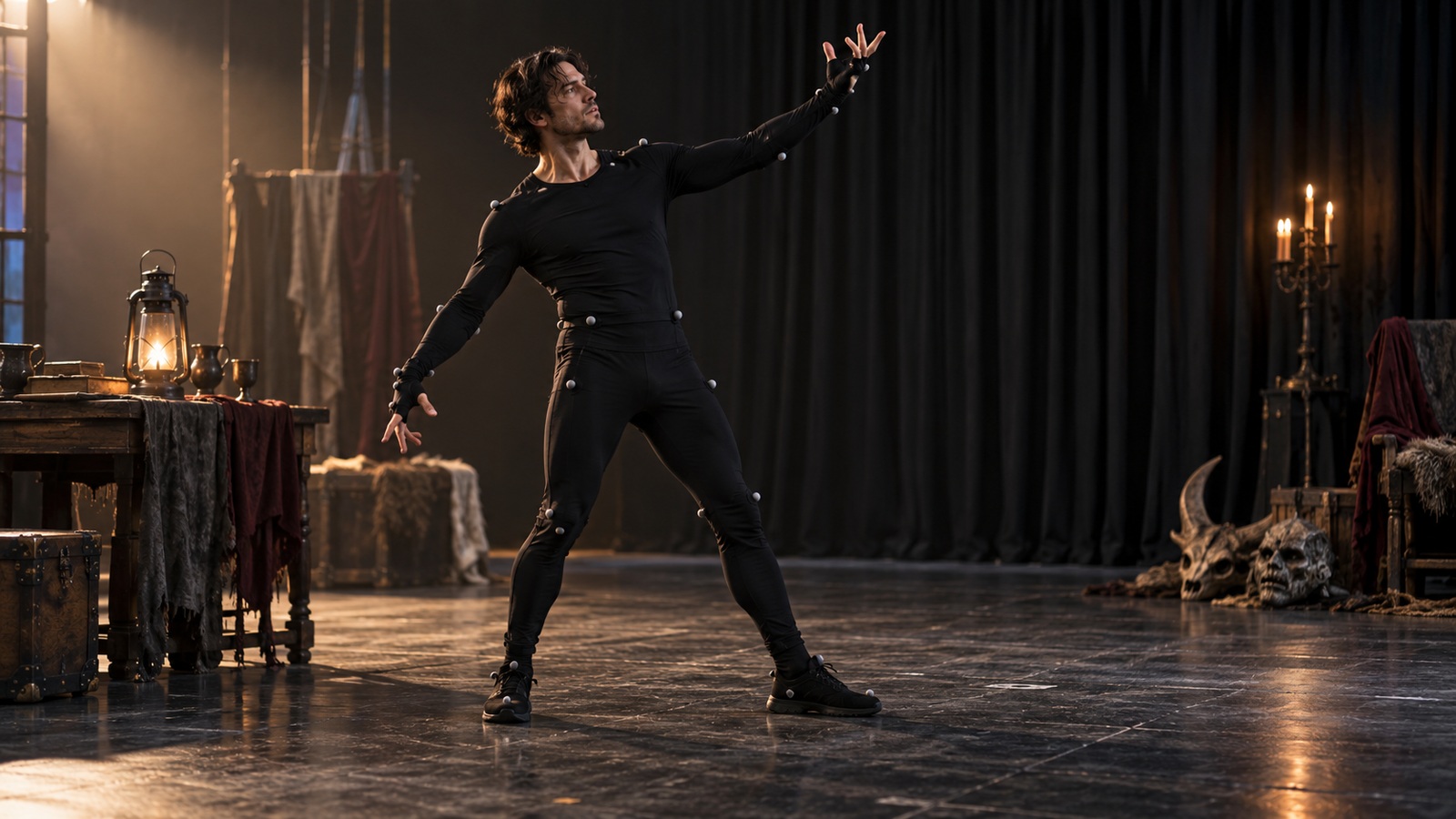
Newbon's career record repeatedly identifies full performance capture alongside voice work. That wording helps readers understand that some roles involve an embodied performance, rather than only a detached audio contribution. A person's stance, movement, and relation to another performer can influence how a line is delivered and received. The recording process provides performed material that then enters a much larger production pipeline.
The finished game still reflects decisions by animators, designers, editors, directors, and technical teams. Facial behavior, camera framing, and interactive transitions cannot responsibly be attributed wholesale to one actor simply because performance capture appears in a credit. Recognizing collaboration makes the acting more intelligible. It explains how a performed scene becomes available to a player through a game that must handle movement, branching, and presentation beyond the original recording session.
Kamski and Gavin Use Conversation to Apply Different Pressure
Detroit's Meet Kamski chapter gives Connor an encounter with the creator of CyberLife and a person who can make information conditional. Kamski turns the visit into a test of the android's choices rather than simply answering a detective's enquiries. His apparent ease matters because the visitors are the ones needing something. The imbalance gives a quiet exchange pressure without demanding that the character become loudly aggressive.
Newbon's Kamski uses that position differently from Gavin Reed's more explicit antagonism at the police station. Gavin's hostility is part of an immediately contested workplace relationship. Kamski can instead let a question hang and make another person decide how to respond to its terms. Both apply pressure, but one does it through guarded control of information and the other through direct friction with someone nearby.
The difference is visible in what the listener has to do. Connor's visit to Kamski becomes a problem of judgement, while a Gavin encounter can feel like an attempt to provoke or exclude him. Recognizing those purposes makes the two performances easier to distinguish than listening only for vocal texture. A pause can dominate an exchange in one role; a sharp interruption can do that work in another.
These are two identities within the same production, which makes them especially useful career examples. The surrounding game supplies a consistent visual world, but the characters occupy different positions and demand different behavior. Newbon's credit includes both voice and capture, allowing the discussion to consider how delivery and physical presence work together. The range is in those particular social actions, not simply in the number of names the actor can put on a list.
Range Is More Useful Than a Collection of Voice Impressions
A recognizable sound can make an actor's work easy to identify, but a career discussion becomes thin if it stops at imitation. The richer question is what a character does through that sound. Does a remark pressure another person, evade a subject, invite trust, or establish distance? Those purposes give delivery a dramatic function. Comparing them across roles reveals a kind of range that a list of accents alone cannot capture.
The chronology also contains work beyond the most recognizable performed characters. Newbon's record includes performance or action direction on Total War: Three Kingdoms and casting or consulting work on Shores Unknown. Those entries identify another kind of responsibility: helping establish performed material and choices for a project rather than only delivering one character's lines. They broaden the career story without needing to inflate every role into a leading protagonist. Acting, creature work, stunts, and directing can all contribute to the same field while remaining different assignments.
Praise becomes clearer when it names the effect being admired. A player might appreciate a character's social ambiguity, the immediacy of a confrontation, or the continuity of an evolving relationship. Those are distinct observations that can coexist. They do not require declaring every other role inferior or constructing a universal ranking of acting talent from one favorite game.
Follow the Character's Purpose to Appreciate the Career
The most revealing comparison is now specific. Kamski controls an information-seeking visit, Heisenberg makes a captive's danger into a display, and Astarion turns a suspicious introduction into the beginning of an ongoing relationship. In each case, the voice does something to another person within a particular scene. The surrounding cast and presentation shape the response, while Newbon supplies an identifiable performed presence.
His career is not a simple progression from horror to a more important genre. The documented working periods overlap, and the tasks include voice, physical performance, creature and combat work, and additional production responsibilities. Astarion's recognition drew fresh attention to that range, but did not create it retroactively. Following the dates alongside the scenes reveals a performer moving among different kinds of danger, authority, and attachment, with each character earning its own manner of occupying the game.