When VR Stops Feeling Like a Screen
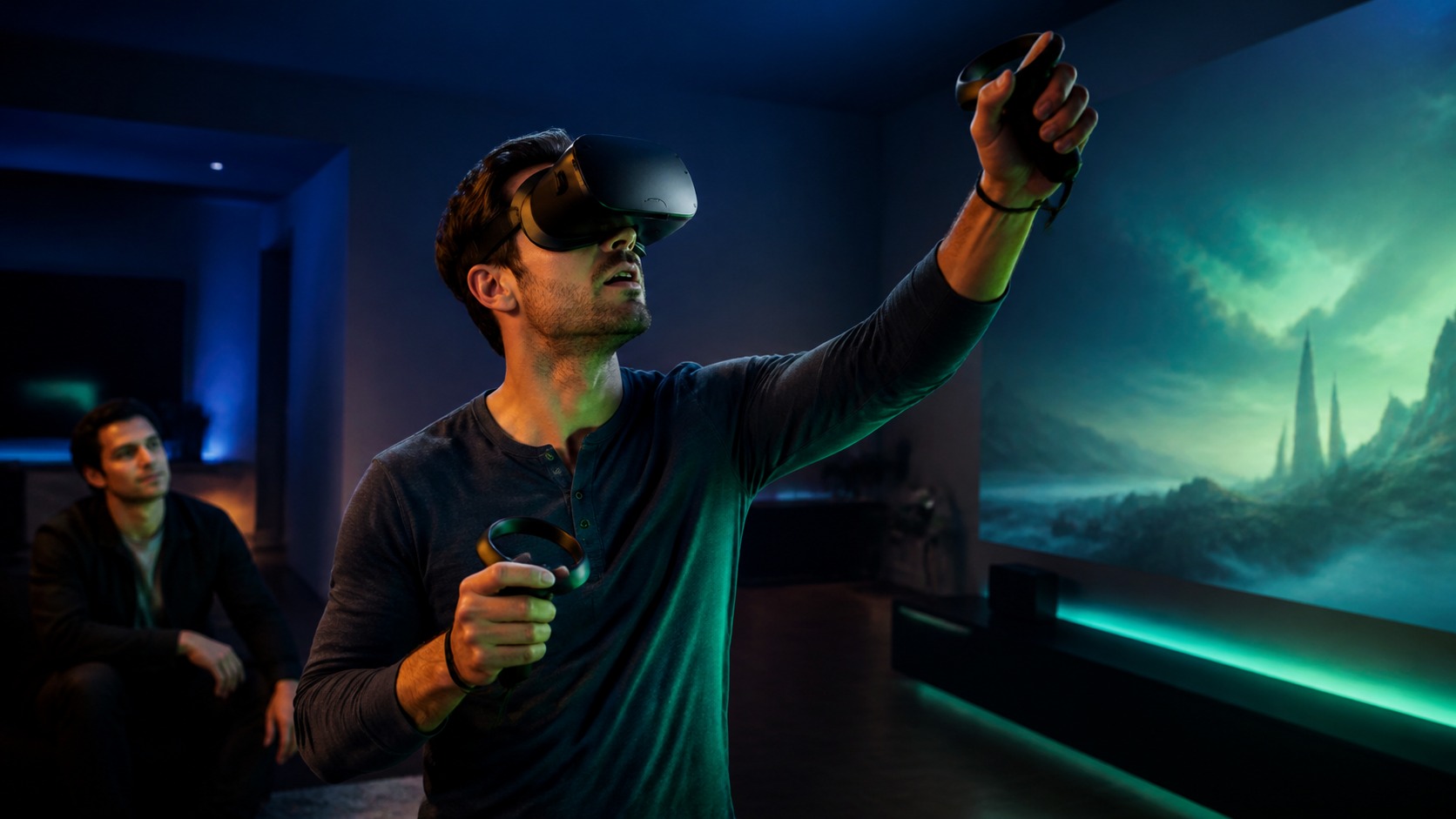
The VR games that truly feel like another world are the ones that make players forget they are only looking at a display. They use scale, sound, movement, atmosphere, and physical interaction to create the sensation of being transported somewhere with its own rules. That does not always mean realism. Sometimes another world is a fantasy kingdom, a lonely space station, a surreal rhythm tunnel, an alien planet, or a tiny diorama that feels alive when you lean toward it.
- Skyrim VR delivers huge fantasy-world presence.
- No Man's Sky VR offers endless alien arrival.
- Lone Echo changes how movement feels.
- Half-Life: Alyx makes strange spaces tactile.
- Moss creates an intimate miniature world.
- Red Matter 2 sells eerie sci-fi atmosphere.
- Subnautica VR makes alien oceans feel surrounding.
- Elite Dangerous VR gives space believable scale.
- Flight Simulator VR transforms real-world perspective.
- Beat Saber creates a world of rhythm focus.
- Scale can make familiar games feel new.
- Movement can teach the body new rules.
- Sound can imply space beyond the visible room.
- Object detail helps players trust environments.
- Comfort lets wonder last longer.
- Atmosphere matters as much as graphics.
- A strong role deepens presence quickly.
- Quiet moments can be more transportive than action.
- Abstraction can still feel immersive.
- Exploration benefits from physical looking.
- Choose Skyrim VR for fantasy wandering.
- Choose No Man's Sky VR for alien wonder.
- Choose Lone Echo for graceful space solitude.
- Choose Alyx for tactile tension.
- Choose Moss for storybook warmth.
- Choose Red Matter 2 for eerie mystery.
- Choose Subnautica for beautiful underwater fear.
- Choose Elite Dangerous for cockpit vastness.
- Choose Flight Simulator for calm aerial scale.
- Choose Beat Saber for flow-state escape.
- Does the world change how you move?
- Does scale affect your emotions?
- Do objects respond believably to your hands?
- Does sound make the space feel larger?
- Can quiet moments still hold attention?
- Does the interface stay out of the way?
- Does the game reward looking around?
- Does comfort support longer presence?
- Does the fantasy fit the headset?
- Do you remember being somewhere afterward?
- Head tracking makes scale feel personal.
- Hand tracking turns intention into action.
- Spatial audio expands the imagined world.
- Stable locomotion protects the illusion.
- Readable lighting supports exploration.
- Physical inventory can deepen role-play.
- Environmental detail rewards curiosity.
- Strong pacing lets wonder breathe.
- Clear silhouettes reduce VR confusion.
- Good comfort keeps players inside the fantasy.
Which VR game feels most like another world?
Skyrim VR and No Man's Sky VR are strong picks because their scale makes players feel transported.
Which VR world feels most physically believable?
Half-Life: Alyx stands out because small objects and environments respond with unusual polish.
Which VR game has the best movement fantasy?
Lone Echo is excellent because zero-gravity movement changes how the body understands space.
Can abstract VR games feel like another world?
Yes, Beat Saber proves rhythm and focus can create transport without realistic scenery.
Which VR game is best for alien exploration?
No Man's Sky VR and Subnautica VR both make strange environments feel surrounding and memorable.
Which VR game is most atmospheric?
Red Matter 2 is a strong atmosphere pick thanks to lighting, pacing, and readable sci-fi spaces.
Does Moss count as another-world VR?
Yes, its miniature scale and storybook perspective create a distinct kind of presence.
Which VR game is best for cockpit immersion?
Elite Dangerous VR and Microsoft Flight Simulator VR both use seated cockpit framing extremely well.
What makes a VR world convincing?
Believable scale, responsive interaction, spatial audio, comfort, and a clear player role all help.
Do graphics matter most in VR worlds?
Graphics help, but interaction, comfort, sound, and movement often matter more than raw detail.
Skyrim VR
Skyrim VR feels like another world because it offers breadth. Mountains sit above the player, caves open into darkness, towns feel like places to pass through, and distant ruins invite wandering. Even familiar quests gain a stronger sense of journey when the landscape surrounds the body.
The game is not the most native VR design, but world-feel matters. Drawing a bow, raising a shield, walking through snow, or looking up at a dragon gives the fantasy a renewed physical presence. The headset turns a known RPG into a place again.
Its strongest moments are often quiet. Standing on a ridge, watching weather move across the world, or entering a torch-lit ruin can feel more transportive than combat. Skyrim VR proves that scale can be one of VR's deepest forms of magic.
It belongs here because another-world feeling depends on duration too. Many VR games amaze briefly, but Skyrim VR can hold a player's imagination for long sessions and repeated returns.
No Man's Sky VR
No Man's Sky VR is built around the promise of stepping into strange places. Alien skies, bizarre creatures, storms, starships, and planetary horizons all gain power when viewed inside a headset. The procedural universe feels more convincing when the player can physically look around it.
The best moments often happen between objectives. Climbing out of a ship, scanning a landscape, watching weather roll in, or lifting off toward orbit creates a sense of travel that fits VR beautifully. The game makes distance feel less abstract.
Some interface pieces still show flat-screen roots, but the broader fantasy remains strong. No Man's Sky VR feels like another world because it offers worlds in the plural. It is less about one perfect place and more about endless arrival.
For explorers, that sense of arrival is enough to make the headset worthwhile. The game captures the feeling of being small under a strange sky, which is one of VR's natural strengths.
Lone Echo
Lone Echo feels otherworldly because movement itself is unfamiliar. Zero gravity changes how players think about distance, direction, and momentum. Pushing off surfaces, grabbing rails, and drifting through a station makes the body learn a new spatial language.
The setting reinforces that sensation. Space outside the station is vast and quiet, while interiors feel close, functional, and believable. The player is not simply walking through corridors. They are floating through a place where every motion has to be reconsidered.
Its emotional world also matters. Character proximity, calm conversations, and slow movement make the station feel inhabited. VR can make another person feel present in a way traditional cameras rarely match.
Lone Echo earns its place because it does not only show another world. It teaches the body how to exist there. That is a rare achievement.
Half-Life: Alyx
Half-Life: Alyx creates another-world feeling through detail and threat. City spaces, alien growths, ruined rooms, and cramped interiors feel convincing because the player can touch and inspect so much of the environment. The world is oppressive because it surrounds the player with believable clutter and danger.
The gravity gloves are especially important. Reaching, pulling, catching, searching, and reloading all connect the hands to the fiction. Those interactions make the setting feel less like scenery and more like a place that answers back.
Alyx also understands contrast. Quiet scavenging makes later horror stronger, and small apartments make larger alien spaces feel stranger. The campaign constantly reminds players that they are moving through a world with history, damage, and rules.
It feels like another world because polish supports belief. The game gives players enough physical evidence to trust the illusion.
Moss
Moss feels like another world in miniature. Instead of placing players inside a huge body, it lets them lean over small spaces and guide a tiny hero through diorama-like environments. That shift in scale creates a surprisingly intimate kind of transport.
The player is both observer and participant. Moving objects, helping Quill, and looking around scenes creates the feeling of peering into a living storybook. The world feels delicate because it is close enough to inspect and small enough to protect.
Moss is important because it proves VR world-building does not need to be first-person. Presence can come from perspective, care, and scale. A small world can feel just as convincing as a vast one if the relationship to the player is clear.
Its comfort also helps the illusion last. Players can settle into the world instead of fighting motion or fatigue.
Red Matter 2
Red Matter 2 creates another-world feeling through atmosphere and object detail. Its science-fiction spaces are quiet, polished, eerie, and deliberate. The game encourages players to inspect tools, solve puzzles, and move through environments that feel designed for close attention.
The visual clarity matters. VR worlds can become tiring when they are overloaded, but Red Matter 2 keeps spaces readable while still making them strange. Lighting, architecture, and props work together to suggest a place with hidden history.
Its pacing is slower than action showcases, and that is a strength. Another-world feeling often grows when players are allowed to linger. Red Matter 2 gives players room to look, touch, and wonder.
For atmosphere-first VR, it remains one of the strongest examples of how careful art direction can sell impossible spaces.
Why Atmosphere Needs Time
VR atmosphere works best when players have enough time to notice it. Red Matter 2 understands that a strange room, a quiet corridor, or a carefully placed object can be more convincing than constant spectacle. The player starts to believe the world because the game trusts observation.
That patience makes the setting feel less disposable. Instead of rushing players from one impressive scene to another, it lets them occupy spaces and ask what happened there. That kind of environmental curiosity is one of the best ways to make VR feel like a destination.
Subnautica VR
Subnautica VR can be rough depending on setup, but its underwater world is naturally suited to awe. Depth, darkness, reefs, creatures, and distant sounds become far more intense when the player feels surrounded. The ocean is one of the best possible settings for VR scale.
The game's survival systems also support world-feel. Oxygen, resources, vehicles, and base building make the alien sea feel like something to learn rather than simply admire. Players slowly turn fear into familiarity as they understand biomes and routes.
Its scariest moments are environmental rather than scripted. Looking down into deeper water or hearing something large nearby can be enough. VR amplifies that vulnerability because the player cannot emotionally step back as easily.
Subnautica VR belongs here because it makes another world feel beautiful, useful, and threatening at once.
Why Underwater VR Feels So Powerful
Underwater spaces give VR an immediate advantage because depth surrounds the player in every direction. Looking above, below, and behind matters. The ocean is not a hallway or a flat arena; it is a volume, and VR makes that volume emotionally readable.
Subnautica's alien sea also changes as players gain equipment and confidence. A biome that once felt impossible can become a route, a resource zone, or a place to build. That transformation from fear to familiarity makes the world feel learned rather than merely visited.
Elite Dangerous VR
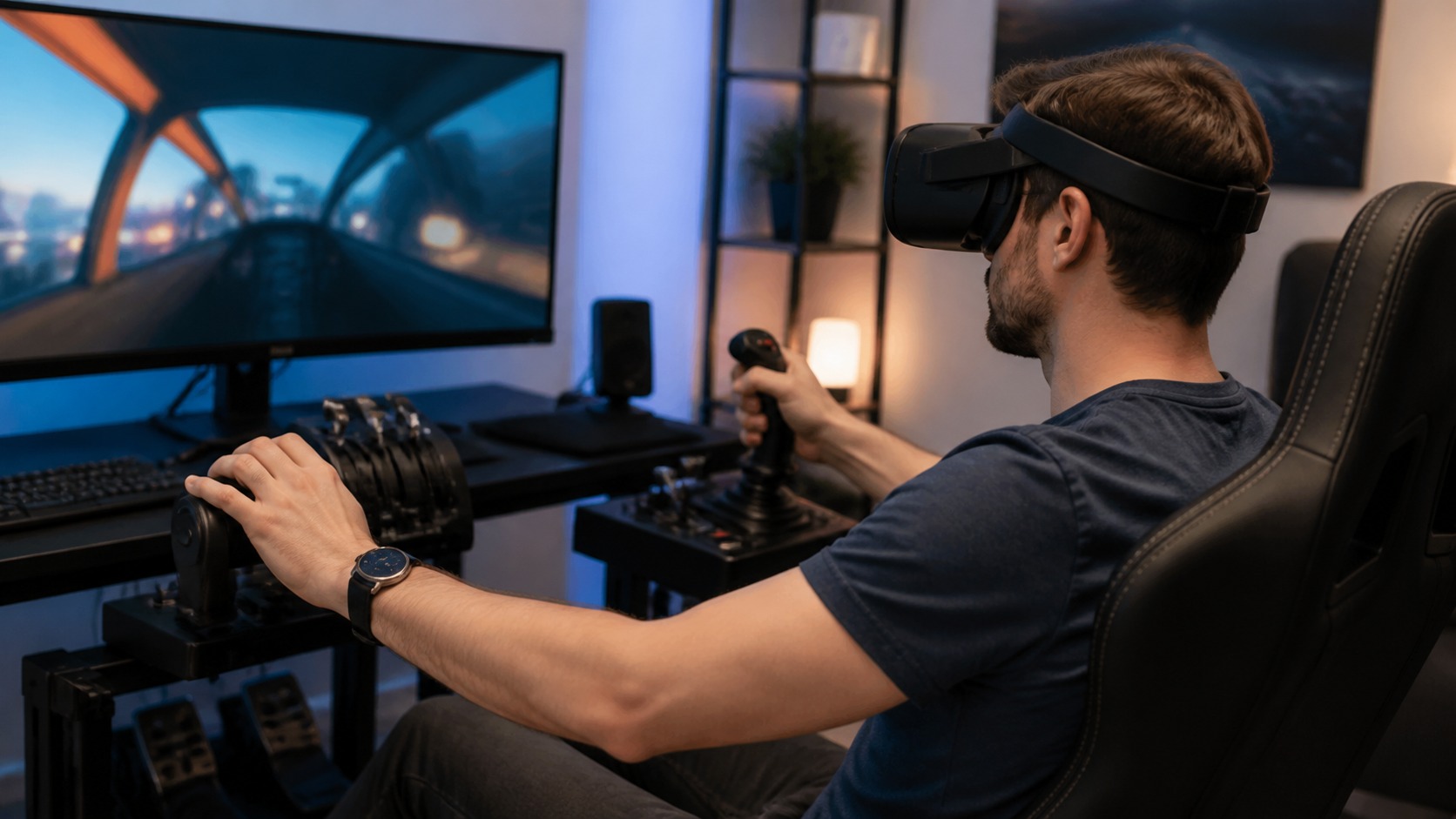
Elite Dangerous VR feels like another world through distance and cockpit presence. Sitting inside a ship gives the player a believable frame, while stars, stations, planets, and empty space create enormous scale. The seated format lets the illusion settle naturally.
The game asks for patience, but that patience can become part of the fantasy. Docking, navigating, mining, traveling, and watching distant lights all reinforce the sense of being a pilot inside a larger universe. It is not always dramatic, but it can be deeply convincing.
Another-world feeling in Elite Dangerous often comes from solitude. The player feels small inside a machine moving through vast space. That slow awe is different from action immersion, but it is powerful for the right audience.
It is one of VR's clearest examples of how simulation can become place.
Microsoft Flight Simulator VR
Microsoft Flight Simulator VR may simulate the real world, but it can still feel like another world because flight changes perspective. Cities, mountains, coastlines, clouds, and runways feel transformed when viewed from a cockpit in VR.
The cockpit is the anchor. Instruments, windows, controls, and horizon lines give the player a stable frame while the world moves around them. That makes the experience convincing even when the player is sitting safely at home.
Its best moments are often procedural: takeoff, climb, turn, approach, landing. VR makes those steps feel continuous and physical. The player is not just controlling a camera; they are occupying a role.
For anyone drawn to scale and calm concentration, Flight Simulator VR can feel transportive in a grounded, almost meditative way.
Beat Saber
Beat Saber does not create another world through realism. It creates one through total focus. Abstract tracks, music, blocks, and motion become a clean performance space where the player's body follows rhythm instead of ordinary room logic.
The world is simple, but that simplicity is why it works. There is nothing to inspect, no map to learn, and no story to parse. The headset narrows attention until movement and sound feel like the whole environment.
That kind of transport is easy to underestimate. Beat Saber can make a living room vanish because the player's timing becomes the center of experience. It is another world built from rhythm rather than geography.
It earns a place here because VR worlds do not have to be literal. Sometimes the most convincing world is a state of flow.
Why Abstract Worlds Count
A VR world does not need realistic walls or characters to feel complete. Beat Saber proves that abstraction can be transportive when the player's role is perfectly clear. The player knows what to do, where to look, and how their body belongs in the space.
That clarity gives the game a strong sense of place even without lore. It is a tunnel of rhythm, reaction, and performance. When a design is that focused, the absence of detail can make the world stronger rather than weaker.
Why These Worlds Work
The VR games that feel most like another world do not rely on one trick. Some use size, some use detail, some use movement, and some use abstraction. What matters is whether the player feels physically and mentally relocated.
The strongest VR worlds give players a role. Explorer, pilot, helper, survivor, hero, dancer, or investigator: each role changes how players look, move, and pay attention. When that role feels natural, the headset becomes more than hardware.
That is the real promise of VR. It can make impossible places feel present and familiar places feel new. The best other-world games leave players with memories of where they stood, what they reached for, and how strange it felt to come back.