How to Pick a First VR Game
The best virtual reality games for first-time players are not always the biggest or most intense games. A first headset session should feel clear, comfortable, and exciting without overwhelming the player. Good beginner VR games explain themselves quickly, avoid confusing movement, use natural gestures, and let people stop before fatigue or motion discomfort sets in. The goal is to make the first session feel magical, not stressful.
- Beat Saber teaches VR through rhythm quickly.
- Walkabout Mini Golf keeps first sessions relaxed.
- Moss offers seated storybook wonder.
- First Steps teaches controller basics gently.
- Job Simulator makes object play funny and forgiving.
- Superhot VR turns action into readable body puzzles.
- Pistol Whip suits active beginners after warm-up.
- The Lab works as a PC VR sampler.
- Racket: Nx offers sporty stationary play.
- Synth Riders creates flowing music movement.
- Start with short sessions and breaks.
- Clear the floor before anyone plays.
- Explain boundaries before the headset goes on.
- Avoid fast smooth movement at first.
- Use seated games for cautious players.
- Keep horror for later sessions.
- Let beginners stop whenever they want.
- Tighten straps without creating pressure.
- Choose clear goals over complex menus.
- Watch for dizziness or fatigue early.
- Pick Beat Saber for instant excitement.
- Pick Walkabout for relaxed social fun.
- Pick Moss for calm wonder.
- Pick Job Simulator for comedy and curiosity.
- Pick Superhot for a first action showcase.
- Pick Synth Riders for dance-like flow.
- Pick First Steps for true beginners.
- Pick The Lab for quick experiments.
- Pick Racket: Nx for sporty movement.
- Pick Pistol Whip for confident active players.
- Avoid intense horror as the first demo.
- Avoid long sessions without breaks.
- Avoid cluttered rooms and low furniture.
- Avoid complex flight sims at first.
- Avoid games with confusing smooth turning.
- Avoid heavy menu management immediately.
- Avoid pushing nervous players too hard.
- Avoid standing near walls or pets.
- Avoid starting with maximum difficulty.
- Avoid treating discomfort as normal.
- The player understands the goal quickly.
- The controls feel natural after a minute.
- The game offers easy stopping points.
- The space feels safe and uncluttered.
- The player laughs or talks while playing.
- Motion stays comfortable during the session.
- Mistakes feel funny instead of punishing.
- Observers can understand what is happening.
- The game invites another quick try.
- The player removes the headset curious, not drained.
What is the best first VR game?
Beat Saber is the safest first pick because it is clear, active, short, and easy to understand.
What VR game is best for nervous beginners?
Moss or Walkabout Mini Golf are great because they are calmer and more comfortable.
Should first-time players try horror?
Usually not first. Horror can be amazing later, but it may overwhelm new players.
How long should a first VR session be?
Start short, often ten to twenty minutes, and take breaks before fatigue appears.
What should I set up before playing?
Clear the floor, explain boundaries, adjust the headset, and choose a beginner-friendly game.
Is smooth movement bad for beginners?
It can be uncomfortable for some new players, so stationary, seated, or teleport games are safer first.
What game is best for a first group demo?
Beat Saber and Walkabout Mini Golf are both strong because turns are easy and spectators understand them.
Can kids or families enjoy beginner VR games?
Yes, but use age-appropriate software, supervise play space, and keep sessions short.
What makes Job Simulator beginner-friendly?
It is funny, forgiving, contained, and built around simple object interactions.
When should beginners try more intense games?
After they understand boundaries, controllers, comfort settings, and how their body reacts to VR.
Beat Saber
Beat Saber is the easiest first recommendation because players understand it almost instantly. Blocks come forward, music sets the pace, and the player swings in the matching direction. There is no camera to manage, no complex movement, and no long tutorial between the player and the fun.
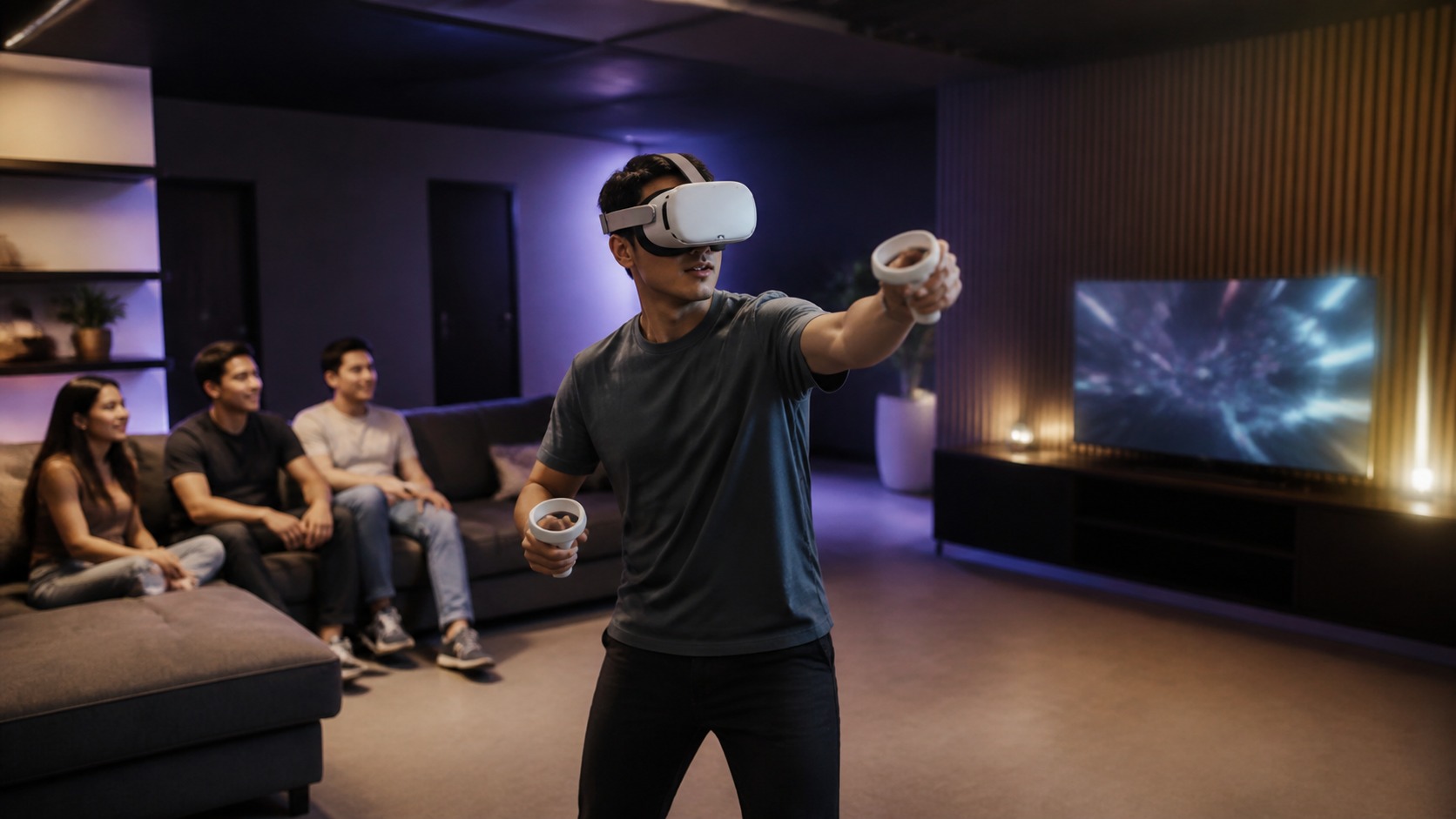
It also works beautifully in short sessions. A beginner can play one song, laugh, hand the headset to someone else, and come back later. That makes it ideal for parties, family demos, and anyone nervous about feeling stuck inside a headset.
Beat Saber teaches one of VR's best lessons: the body can be the controller. It is active without being confusing, simple without being empty, and exciting enough to make first-time players understand the medium quickly.
Why Beat Saber Is the Default Demo
Beat Saber works as a first VR game because it removes almost every common barrier. New players do not have to walk with a stick, read a map, aim through a complicated weapon system, or follow a long story setup. They only need to listen, look forward, and swing.
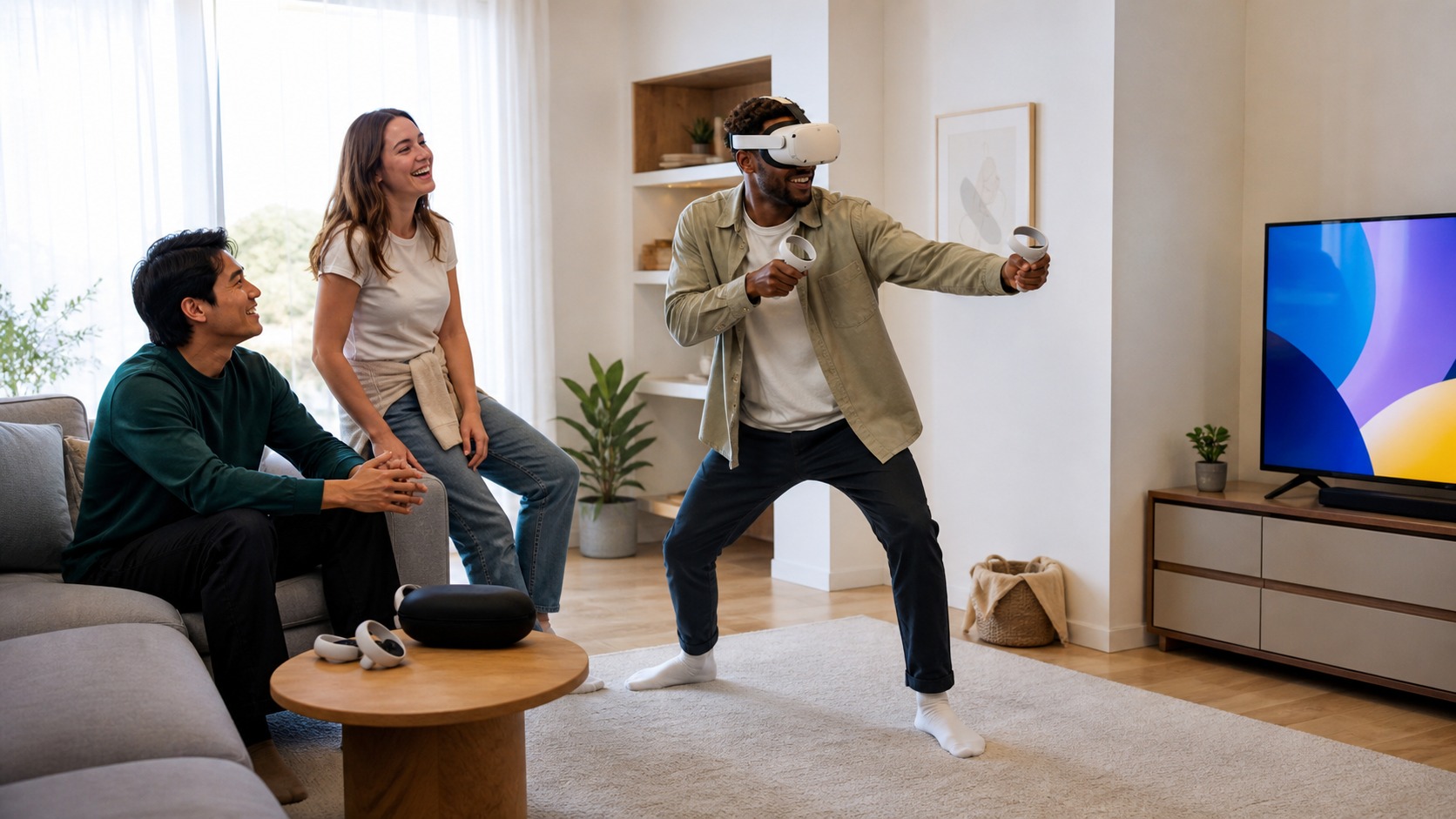
That simplicity also makes supervision easier. A friend can explain the rules before the headset goes on, watch the player from outside, and know when a song is about to end. For a first demo, that kind of predictability is valuable.
Walkabout Mini Golf
Walkabout Mini Golf is one of the best first-player choices because the real-world action is familiar. Most people understand how to line up a putt, swing gently, and watch where the ball goes. VR adds scale and social presence without burying the player in systems.
It is also comfortable. The pace is calm, the courses are readable, and players can take turns without pressure. That matters because many first-time players need time to adjust to depth, controllers, and headset weight.
The game works especially well for groups. People can talk, joke, and learn naturally while playing. It shows that VR can be relaxed and social, not only intense or futuristic.
Why Calm Social Games Help
A calm social game can be the perfect first step because it gives the player permission to slow down. Instead of worrying about enemies or failure, they can focus on the headset, the controller, and the sense of depth. Conversation keeps the experience grounded.
Walkabout also proves that VR does not need to impress through intensity. A simple putt can feel satisfying because the player is standing inside a playful course with other people nearby. That is a gentle but powerful introduction to presence.
Moss
Moss is a wonderful beginner VR game because it uses a comfortable seated perspective. Players guide Quill through charming diorama-like spaces while also reaching into the world to solve puzzles. It feels magical without requiring full-body action.
The third-person viewpoint helps new players settle in. Instead of being asked to run, fight, and turn constantly, they can lean, observe, and interact at a gentle pace. The world feels alive, but not overwhelming.
Moss is also a great introduction to VR scale. Looking down into tiny environments and helping a small hero creates a sense of presence that flat screens cannot match. It is one of the best examples of beginner-friendly wonder.
Why Seated VR Can Be Magical
Some people assume a first VR game needs big movement, but seated VR can be more convincing for beginners. When the body feels stable, the player can focus on depth, scale, and interaction without worrying about balance.
Moss uses that stability beautifully. The player can lean toward the world, notice small details, and feel connected to Quill without needing to master locomotion. It is gentle, but it still shows why VR is different.
First Steps
First Steps exists to teach the basics, and that is exactly why it belongs in a beginner discussion. It introduces grabbing, throwing, pointing, touching, and looking around in a playful way. For someone who has never used motion controllers, that foundation matters.
The experience is short, friendly, and designed around discovery. New players can experiment without worrying about failure. That reduces anxiety and lets them build confidence before moving into fuller games.
It may not be the deepest VR experience, but it is one of the best warm-ups. Sometimes the right first game is the one that teaches the hands how VR works.
Job Simulator
Job Simulator remains a strong first VR game because it turns simple object interaction into comedy. Players pick things up, press buttons, throw items, make messes, and discover that VR can be funny through hands-on play.
Its rooms are contained and readable, which helps new players avoid disorientation. The tasks are silly, but the physical logic is clear. If something looks like it can be grabbed, it often can be, and that is exactly the kind of cause-and-effect new players need.
The game is also forgiving. There is no intense failure state, no complicated locomotion, and no pressure to perform perfectly. It invites curiosity, which is one of the healthiest first VR emotions.
Why Object Play Teaches VR
Object play is underrated for first-time users. Picking up a mug, pressing a button, opening a drawer, or tossing something across a room teaches the connection between real hands and virtual response. That lesson is more important than any graphics showcase.
Job Simulator succeeds because it makes those lessons funny. When a player makes a mess, the game usually treats it as part of the joke. That lowers embarrassment and helps beginners experiment instead of freezing up.
Superhot VR
Superhot VR is a good first action game for players who want something dramatic but manageable. Time moves when the player moves, so action becomes thoughtful instead of chaotic. That gives beginners room to dodge, aim, grab, and plan.
The visual style is clean, which helps readability. Enemies, weapons, and danger are easy to understand. New players can feel powerful without tracking a busy interface or learning complicated controls.
It is more intense than Moss or Walkabout, so it is not the gentlest first pick. But for someone who wants a memorable action moment, Superhot VR is one of the clearest ways to show how body movement can become gameplay.
Why Superhot Should Not Be the Very First for Everyone
Superhot VR is clear, but it still asks players to dodge and reach with confidence. That can be thrilling for some beginners and too much for others. The best use is usually after a calmer warm-up, when the player already trusts the headset.
Once that trust exists, Superhot can create a remarkable first action memory. Dodging a projectile by leaning aside is the kind of moment people talk about after removing the headset.
Pistol Whip
Pistol Whip is a strong beginner option for active players who like rhythm and action. It combines shooting, dodging, and music into short stages that are easy to grasp. Players do not need to understand a big world or manage inventory; they just move with the beat and aim confidently.
The game can become challenging, but beginners can start at easier settings and still feel stylish. That sense of style matters. A good first VR game should make players feel capable quickly.
Pistol Whip is best for people who are comfortable standing and moving. It may be too energetic for a cautious first session, but it is excellent once someone wants a slightly more intense second step.
The Lab
The Lab remains a useful beginner collection because it offers small VR ideas instead of one large commitment. Players can try simple interactions, short scenes, archery, playful experiments, and room-scale moments in a low-pressure format.
That variety is helpful for discovering what a new player enjoys. Some people love aiming, some love exploring, some love silly object play, and some only want to look around. A sampler-style experience lets those preferences emerge naturally.
It is especially useful for PC VR setups where new players may feel intimidated by the library. The Lab gives them a safe place to touch the medium before choosing a longer game.
Racket: Nx
Racket: Nx is a good beginner choice for players who want physical play without artificial walking. The player stands in place, hits a ball, watches it curve around a dome, and learns through movement. It feels active but spatially contained.
That containment is valuable. First-time players can focus on timing and aim rather than worrying about where the game is taking them. The rules are simple enough to understand quickly, while the skill ceiling gives returning players room to improve.
It is a reminder that beginner VR does not have to be passive. A game can be sporty, energetic, and comfortable when its movement design respects the player's real space.
Synth Riders
Synth Riders is another excellent first-player rhythm option, especially for people who want flowing movement rather than slicing. Players follow rails, hit notes, and move with music in a way that feels dance-like and approachable.
The game works because it gives the body a readable path. Instead of learning complicated commands, players follow motion. That is a strong introduction to VR because it makes the headset feel natural rather than technical.
For first-time players who enjoy music but want a different feel from Beat Saber, Synth Riders is an easy recommendation. It is active, colorful, and quick to understand.
Beginner Setup Tips
The best beginner VR game can still go wrong if the setup is careless. Clear the floor, tighten the headset comfortably, explain the guardian boundary, and start with short sessions. A new player should never feel rushed or trapped.
It also helps to begin with games that avoid fast artificial movement. Teleport, seated play, stationary rhythm, and contained room-scale activities are usually better first steps than smooth locomotion shooters or intense horror.
Let the player choose when to stop. Comfort builds trust, and trust makes the next game more exciting. The best first VR experience is the one that leaves someone curious for another session.
How to Guide Someone Through Their First Session
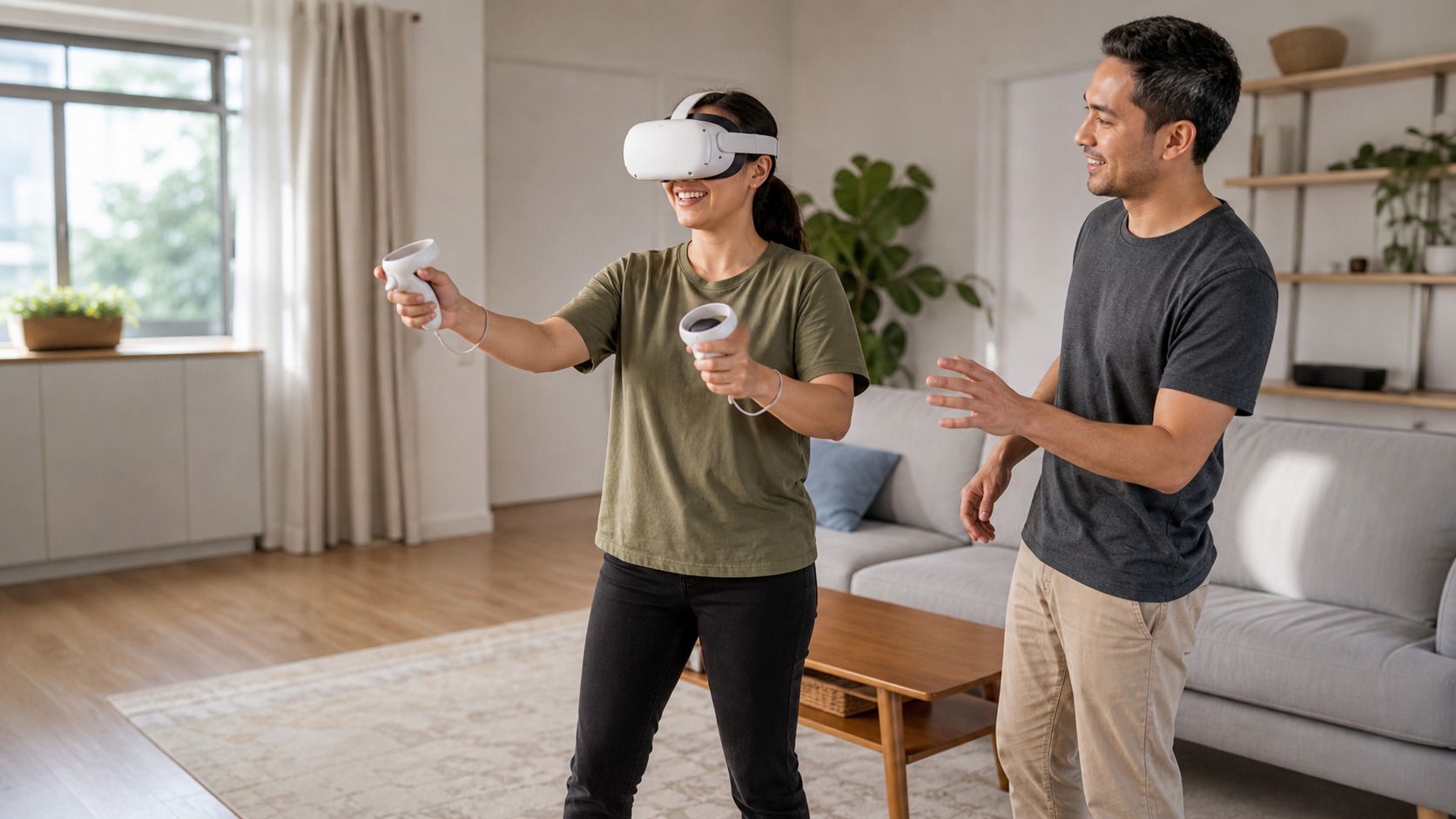
The best guide says less than they think. Explain the boundary, the pause button, and the basic goal before the headset goes on. Once the player is inside, use calm short prompts instead of a flood of instructions. Too much coaching can make the headset feel stressful.
It also helps to narrate safety from outside the play space. Remind the player where the couch is, encourage small steps, and offer breaks before they ask. A good first session feels supported, not managed.
What First-Time Players Should Avoid at First
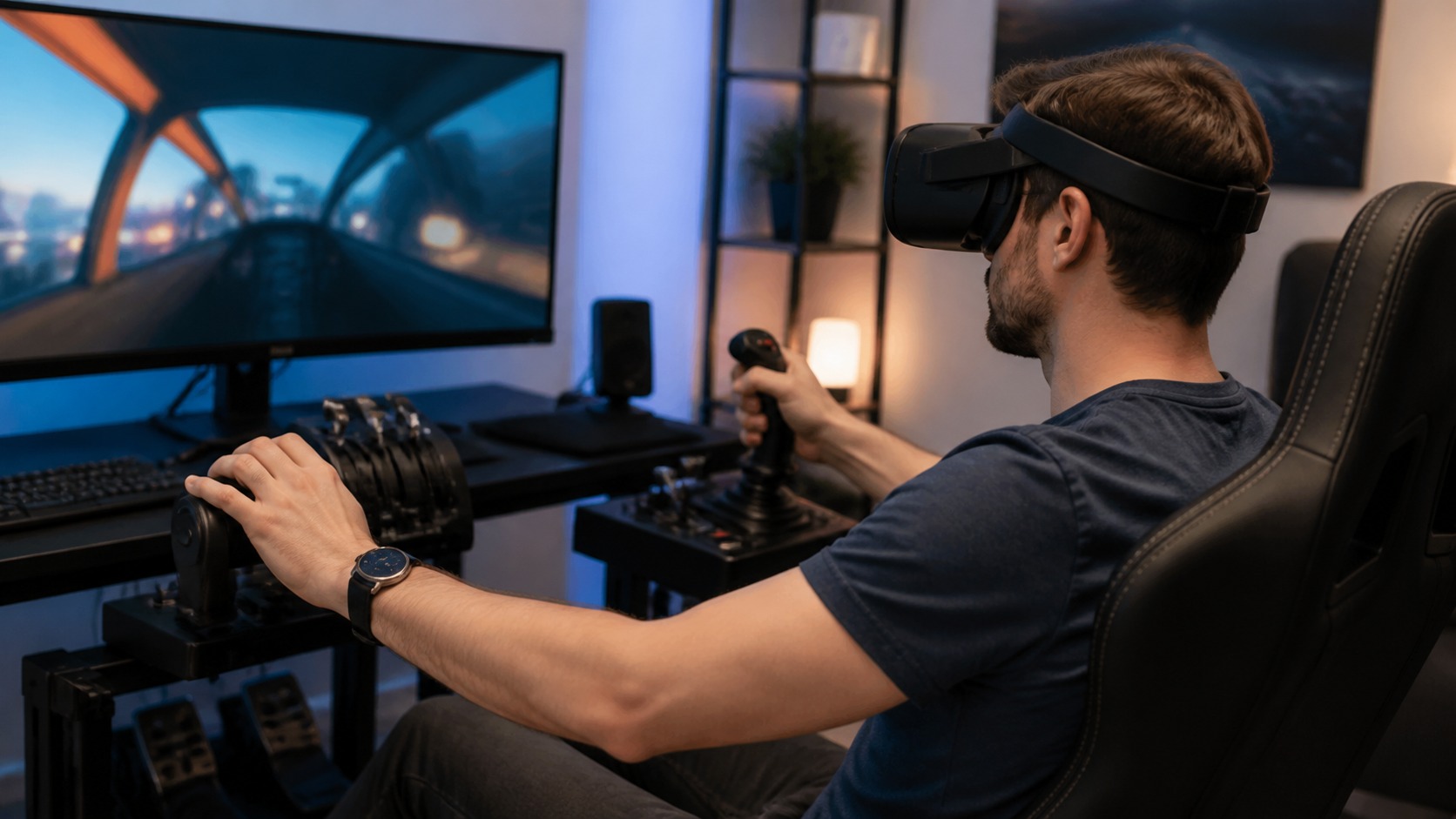
Beginners should be careful with intense horror, fast smooth movement, complicated cockpit sims, and games that require lots of menu management. Those experiences can be great later, but they may create discomfort or confusion too early.
A first session should also avoid marathon play. Even if the player is having fun, short breaks help prevent fatigue. VR asks more from the body than regular gaming, so pacing matters.
Once someone understands the headset and controllers, the library opens up quickly. The smartest path is comfort first, spectacle second.